
Just before midnight on December 2, four military-grade drones slipped into restricted airspace over Dublin, arriving on the precise route and timing scheduled for Ukrainian President Volodymyr Zelensky’s aircraft. His plane had landed minutes early on his first official visit to Ireland, narrowly missing an apparent intercept point that the drones reached with striking accuracy. The breach went undetected by Irish systems at the time and was only reported to top officials many hours later, exposing serious gaps in national and European security as hybrid tactics intensify across the continent.
Drones Shadow Presidential Flight And Navy Ship

Zelensky’s aircraft landed at Dublin Airport on December 2, slightly ahead of its expected arrival time. According to CBS News, four drones then entered the same protected air corridor, reaching the coordinates where his plane had been scheduled to be at that moment. The adjustment in landing time meant the drones arrived seconds too late to coincide with the flight.
After missing the presidential aircraft, the drones shifted to the Irish Navy vessel LÉ William Butler Yeats, which had been covertly tasked with security duties. They remained overhead for up to two hours, visually observed from the ship but not detected by radar. Irish police disruption equipment on shore could not reach them, and nearby Air Corps assets did not engage. Officials later acknowledged that had Zelensky’s plane arrived as planned, the aircraft and drones would likely have been in the same airspace at the same time.
State-Level Technology And Visible Signaling
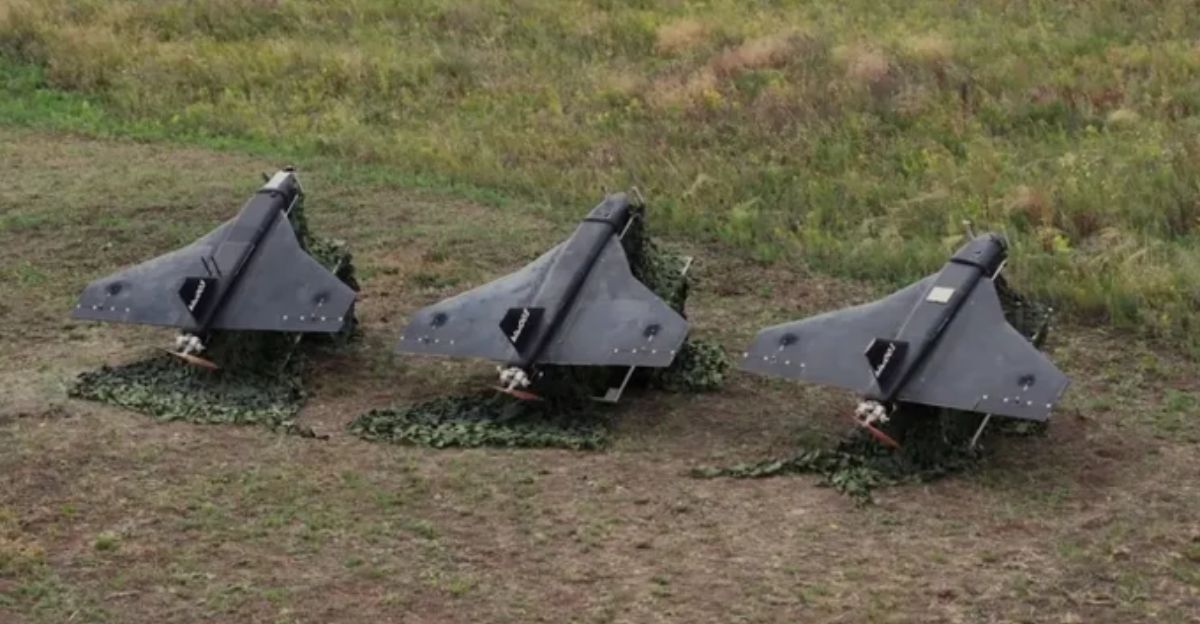
Security analysis suggested the systems resembled Gerbera-class drones estimated at approximately €10,000 to €20,000 each, implying a total outlay of less than €100,000 for the operation. The drones were equipped with stabilized cameras and ranges exceeding 300 kilometers, capabilities assessed by UK Defence Journal as consistent with state-directed operations rather than improvised devices.
Witness reports indicated the drones flew with lights on, including as they approached the pre-arranged intercept point. Irish and European security sources viewed this visible profile as more consistent with a deliberate signal or test of defenses than a covert strike attempt. Investigators and allied analysts have focused on how the operators obtained such precise information on Zelensky’s route and timing, examining possibilities ranging from leaked flight plans to electronic interception or real-time tracking.
Delayed Alerts And Exposed Weaknesses
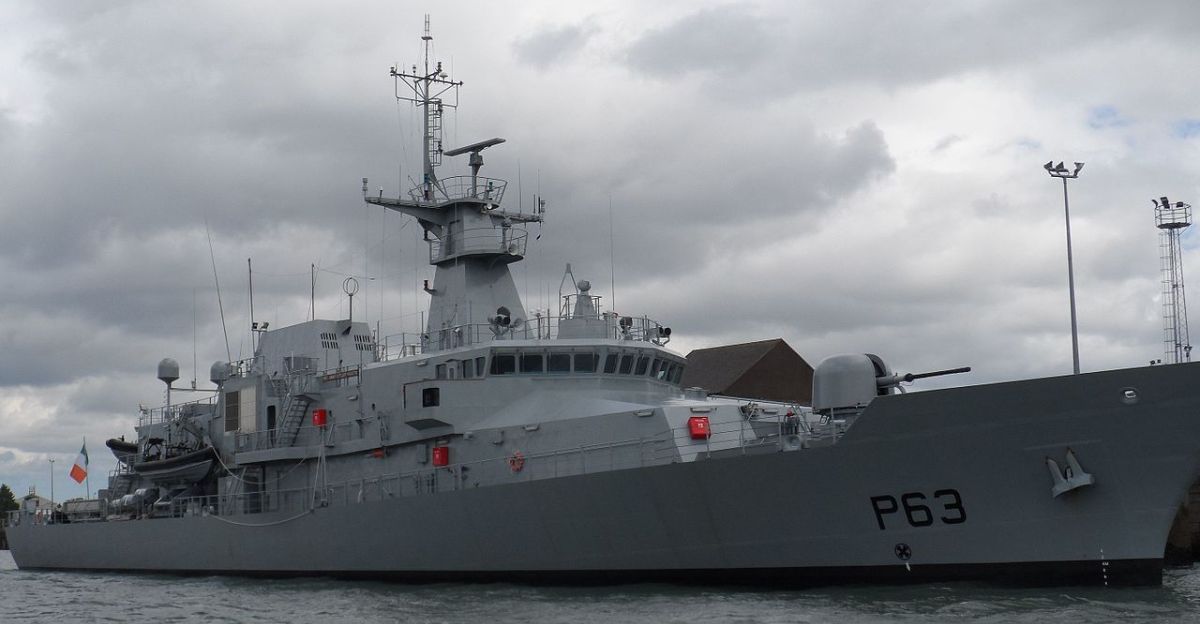
The LÉ William Butler Yeats relied on visual spotting because its sensors were not configured to detect or counter unmanned aircraft. UK Defence Journal reported that Ireland’s military and law enforcement assets on scene lacked both integrated radar coverage and effective counter-drone systems. The drones were able to loiter overhead, likely recording electronic emissions, observing response procedures, and collecting detailed imagery with their high-resolution surveillance camera systems before returning to base with ample fuel margin.
RTÉ reported that Garda Commissioner Justin Kelly was not informed until the early hours of December 3, between 12 and 18 hours after the drones had departed. Senior ministers were updated even later, close to a full day after the incident. The Special Detective Unit opened an investigation into possible launch points around Howth or from a vessel offshore, but no operators have yet been publicly identified. The time lag in internal reporting and the absence of real-time detection have become central issues in Dublin’s political and security debate.
A European Pattern Of Hybrid Pressure

The Dublin incident followed a series of airspace violations and drone incursions across Europe. In September, Poland reported that between 19 and 23 Russian drones crossed its territory, prompting Prime Minister Donald Tusk to describe it as an unprecedented attack on both Poland and NATO. Dutch F-35 jets shot down several drones in that episode, the first direct downing of Russian systems by NATO forces since 2022.
Strategic assessments cited in the article noted that eight European states – Poland, Germany, Denmark, Belgium, Romania, Estonia, Lithuania, and Ireland – have reported similar drone activities or airspace breaches in recent months. Estonia and Lithuania have authorized direct shootdowns, while Germany has deployed Patriot missile batteries to Poland. NATO commanders, including General Alexus Grynkewich, have publicly warned that hybrid operations combining psychological pressure, reconnaissance, and probing of defensive boundaries are likely to increase.
The timing in Ireland was also politically charged. On December 1, Taoiseach Micheál Martin announced an additional €125 million in support for Ukraine, including €100 million in non-lethal military assistance and €25 million for energy infrastructure repairs. The drones entered Irish airspace within hours of that announcement, reinforcing suspicion among analysts that the operation formed part of a broader campaign of signaling and coercion rather than an isolated event.
Defense Spending, Critical Infrastructure, And Cyber Risks
The incident has amplified longstanding concerns about Ireland’s limited military capacity. UK Defence Journal and the Atlantic Council have highlighted that Ireland maintains roughly 7,400 active-duty personnel, low by regional standards. With roughly three-quarters of international data cables passing near Irish waters and only eight patrol vessels at sea, the country’s ability to protect key infrastructure has been repeatedly questioned.
Budget 2026 increased Ireland’s defense allocation to €1.5 billion, with capital spending of €300 million, and a plan to raise cumulative capital investment from €1.1 billion to €1.7 billion by 2030. Planned purchases include modern radar systems, H145M helicopters, subsea monitoring equipment, and integrated counter-drone capabilities. In June, Ireland also agreed a contract with Thales for towed array sonar systems to better monitor undersea infrastructure, as damage to critical cables can cost hundreds of thousands to millions of euros and take weeks to repair.
At the same time, Ireland’s National Cyber Security Centre has warned of mounting digital exposure. Its 2025 assessment found 349,000 Irish networks exposed to hostile activity, while Centripetal Ireland reported that 44 percent of networks contained vulnerabilities, adding up to more than half a million weaknesses nationwide. Dublin is identified as the focal point of risk. Officials and analysts increasingly describe hybrid pressure as a dual challenge, combining physical incursions such as drone overflights with cyber probing and potential disruption.
In the background, Russia has expanded drone production at the Alabuga Special Economic Zone in Yelabuga. CNN reporting cited in the article described a facility using young Russian and African workers, with capacity of up to 50 Gerbera drones per day and contracts worth about 700 million yuan with 34 Chinese firms, including suppliers of airframe kits. This industrial base underpins sustained drone use that forces European states to spend disproportionately more on interception. Defense analysts estimate that a Dutch F-35 costs roughly €40,000 per flight hour and each missile about €1.7 million, compared to roughly €20,000 for a Gerbera drone, highlighting a cost imbalance that can strain European budgets.
Investigations into how the operators obtained detailed knowledge of Zelensky’s route and timing are ongoing among Irish authorities and allies. Whether the Dublin overflight stemmed from a leak, advanced signals interception, or other means, it has underscored that leaders’ movements and national infrastructure are now tested not just in conventional ways but through persistent, relatively low-cost hybrid operations. Ireland’s accelerated defense and infrastructure plans, and its €125 million support package for Ukraine, illustrate both the vulnerabilities and the political choices facing European states as they adjust to a security landscape in which such incidents may become more frequent.
Sources
CBS News – “Unidentified drones breached Ireland’s airspace during visit by Ukraine’s Zelenskyy,” December 5, 2025
BBC News – “Irish government figures briefed on drone presence during Zelensky visit,” December 4, 2025; “Irish police investigating drone activity during Zelensky visit,” December 5, 2025
Reuters – “Drones were spotted near Zelenskiy flight path to Dublin,” December 4, 2025; UK Defence Journal – “Unidentified drones breach Irish airspace on Zelenskyy visit,” December 4, 2025
CNN – “Russia is intensifying its air war in Ukraine. A secretive factory is fueling Moscow’s drone warfare,” December 27, 2024