Russian President Vladimir Putin has repeatedly framed Ukraine’s long-term prospects in stark, zero-sum terms. Still, Ukraine has not collapsed and continues to resist Russian offensives across the frontline, with assault waves collapsing far from their targets.
Over the past 72 hours, defenders have repelled repeated mechanized attacks, inflicting heavy losses on units designed to overrun smaller garrisons; this pattern reflects a broader trend of costly assaults producing minimal gains in several sectors.
The Mathematics of Failure
In the Oleksandrivka direction near Kupiansk, Ukrainian reports indicate that the vast majority of Russian ground assaults fail, with commanders observing a cycle in which attackers advance into layered defenses, endure massive casualties, then retreat or are destroyed. Assault frequency remains high at dozens of attempts per day, but success has sharply declined.
Russian forces target Donbas hubs like Pokrovsk and Myrnohrad for their logistical value, aiming for broader advances, yet, despite numerical edges, gains remain minimal as equipment and troops are depleted at rates many analysts describe as unsustainable.
Layers of Denial
Ukraine’s fortifications form interlocking barriers: anti-tank ditches, razor wire, concrete obstacles, minefields, and positions held by small squads, with mobile elements such as drones, mortars, and artillery layering fire on breakthroughs and forcing assailants through successive kill zones before they can approach Ukrainian lines.
Near Kupiansk, a 20–25 kilometer tactical “kill zone” created by Ukrainian unmanned systems restricts Russian vehicles from operating within that depth. It prevents infantry from approaching within roughly one kilometer, with a Ukrainian drone unit reporting that this zone can neutralize the large majority of attacking forces before they reach Ukrainian positions. Infantry can withdraw strategically, drawing groups into ambushes where concentrated strikes destroy them and prevent them from holding captured ground.
The Price Tag
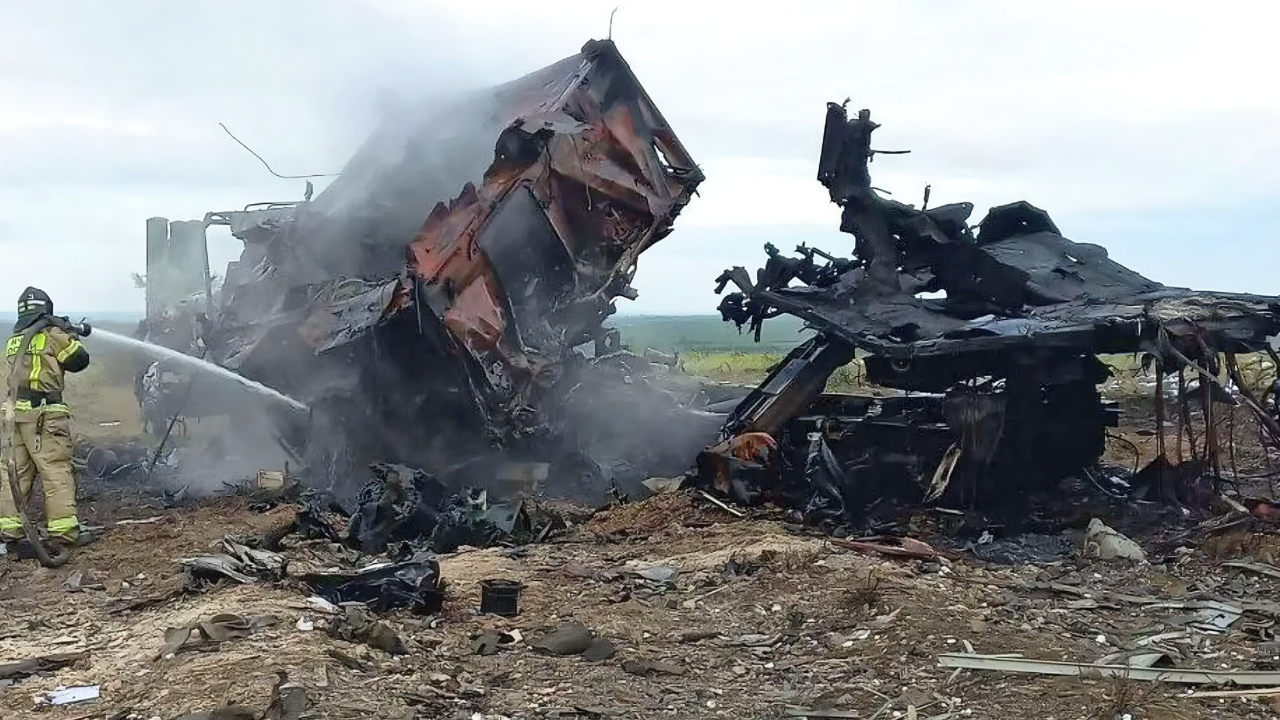
Losses extend beyond infantry. In Sumy and other sectors, Ukraine has destroyed Buk‑M2 and Buk‑M3 air defense systems, which open‑source estimates value at roughly $30–40 million per unit; losses of two such systems can represent on the order of $60–80 million in destroyed equipment and create gaps in rear protection that are difficult to replace quickly.
Civilian impacts underscore the toll. On January 21, 2026, strikes left almost 60% of Kyiv without power, with around 600,000 people temporarily lacking electricity and thousands of buildings losing heat during freezing weather. Reporting indicates that over half a million residents left Kyiv in January amid Russia’s energy blitz, as infrastructure targeting intensified; Ukrainian officials and international observers have described some of these attacks as potential breaches of humanitarian law.
Drone Attrition Favors Ukraine
Air defenses play a central role. On January 20–21, Ukrainian air defense and electronic warfare assets intercepted or jammed the majority of Russian long-range drones launched in large-scale attacks, with Ukrainian authorities reporting interception rates of around 4/5 or higher in several recent barrages. Drones now account for a significant share of Russian vehicle losses and personnel casualties, with many attacks failing before reaching intended targets as Ukrainian units improve detection and countermeasures.
A Russian military blogger from the Northern Grouping has acknowledged that reserves cannot easily keep pace with the tempo of assaults while also providing the depth needed for follow-on exploitation, leading to infiltrations that stall and become isolated under Ukrainian counterstrikes.
Theater-Wide Resilience
Institute for the Study of War assessments indicate that these patterns hold across multiple fronts—including Kharkiv, Kupiansk, Hulyaipole, Slovyansk, Pokrovsk, and Zaporizhzhia—where Russian forces conducted dozens of assaults on January 17–18 without achieving significant territorial gains. Leaks and commentary in Russian media highlight Kremlin concerns over public fatigue and rising, potentially unsustainable casualties, with some analysts questioning Moscow’s strategy absent further mobilization.
Ukraine’s doctrine—small squads in fortified positions, withdrawal to preplanned kill zones, drones guiding fire, and reserves reclaiming contested ground—has been applied repeatedly and is credited with improving casualty ratios in several sectors.
Western aid underpins this approach: 155mm artillery shells, air defense systems, electronic warfare gear, and drone components from the U.S. and NATO partners all contribute to sustaining Ukraine’s defensive edge, even as political debates in donor countries periodically complicate future aid packages.
The following year will test endurance. Russia continues rotating conscripts and mobilized soldiers into high‑loss assaults that rely on attrition, while Ukraine is preparing limited counteroffensives in 2026 with specialized assault units that have already taken back localized positions around Kupiansk and other hotspots. Whether Ukraine’s kill zones remain a durable asymmetric model or are eroded by pressure and adaptation will depend heavily on supplies, domestic resolve, and the continuity of external support.
Sources:
Institute for the Study of War, Russian Offensive Campaign Assessment, January 20, 2026
Institute for the Study of War, Russian Offensive Campaign Assessment, January 21, 2026
Reuters, Almost 60% of Kyiv without power as Russian strikes shatter grid, January 21, 2026
Kyiv Independent, Over half a million left Kyiv in January amid Russia’s energy blitz, January 20, 2026
Washington Examiner, 600,000 residents flee Ukraine’s capital over destruction of energy infrastructure, January 20, 2026
Forbes, Analysis on Ukrainian defensive tactics and layered obstacle belts, January 16, 2026