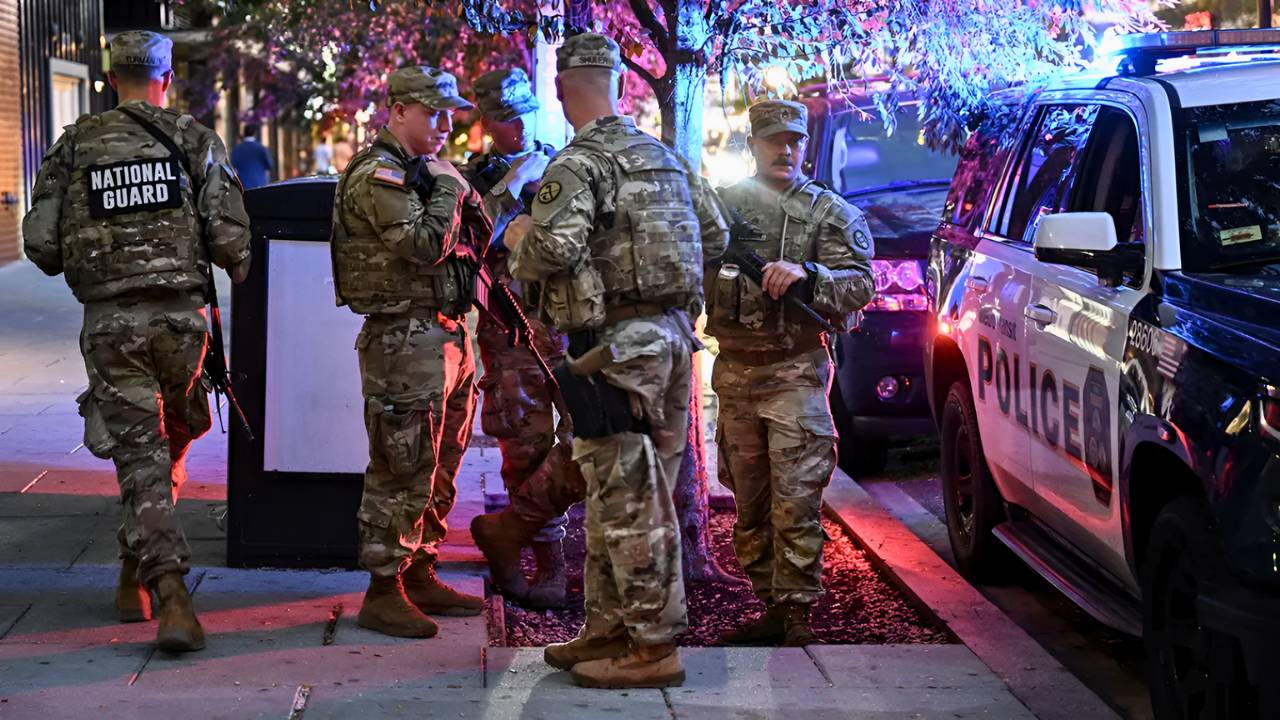
Soldiers and steel barriers now frame the French Quarter streets where a truck plowed through New Year’s revelers one year ago, killing 14 people and injuring dozens more. On December 30, 2025, 350 Louisiana National Guard troops arrived in New Orleans, taking up posts in and around Bourbon Street as the city prepares for New Year’s Eve, the Sugar Bowl, and Mardi Gras on the first anniversary of the January 1, 2025, terrorist attack.
The Guard presence is expected to stretch through February 28, 2026, covering the entire Carnival season. State and city leaders say the deployment is meant to reassure residents and visitors and prevent a repeat of last year’s mass-casualty assault.
The 2025 Attack
The attack was carried out by 42-year-old Shamsud-Din Jabbar, a U.S. citizen and former Army veteran from Texas who served from 2007 until his 2020 discharge. In the hours before the assault, Jabbar posted several videos on Facebook declaring his allegiance to ISIS and vowing to strike. The FBI concluded he acted alone and was driven by extremist ideology.
At approximately 3:15 a.m. on January 1, 2025, Jabbar steered his white pickup truck around police blockades onto Bourbon Street and accelerated through a three-block stretch between Canal and Conti streets crowded with New Year’s revelers. After colliding with an aerial work platform, he exited the truck and opened fire on officers. Police shot and killed him during the exchange, wounding two officers in the process.
The attack killed 14 people and injured 57 others, making it the deadliest domestic terror incident on U.S. soil that year. The scale of casualties and the timing—just after midnight on New Year’s Day—fundamentally reshaped how city and state officials view security for large public celebrations.
Hidden Dangers and Security Vulnerabilities
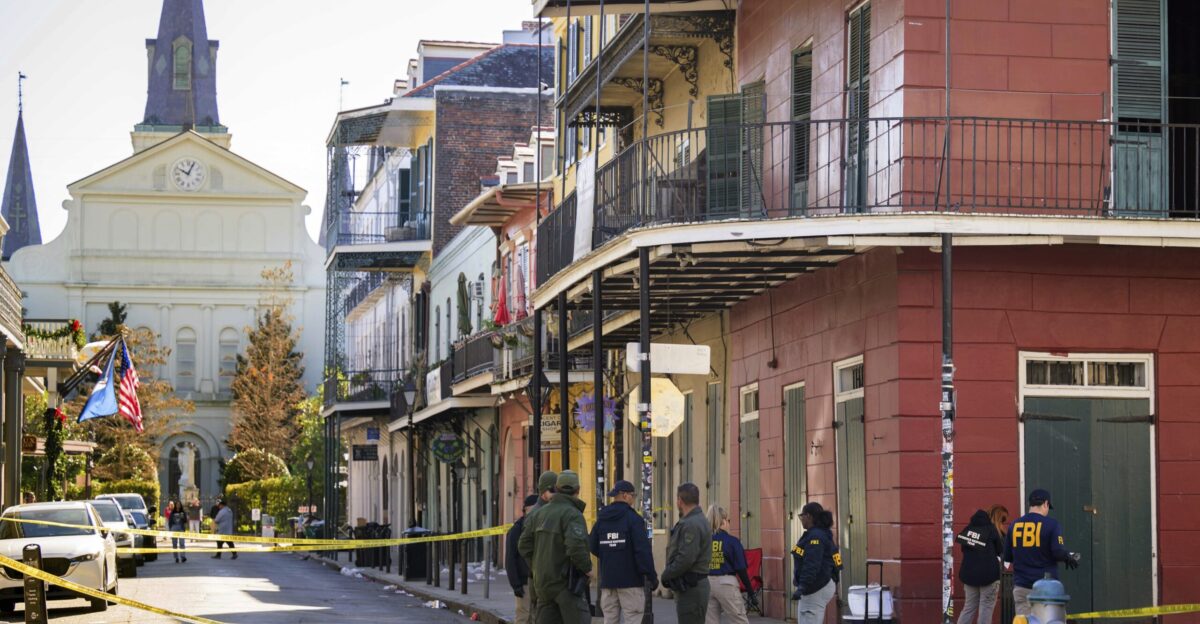
Investigators discovered the attack could have been even more devastating. Before driving onto Bourbon Street, Jabbar placed two improvised explosive devices inside coolers at separate French Quarter locations. He dropped the first cooler near St. Peter Street at 1:53 a.m. and a second at Bourbon and Toulouse Streets at 2:20 a.m. The devices were found only after the truck rampage and did not detonate.
The incident exposed significant weaknesses in the French Quarter’s physical defenses. Police had installed bollards and other barriers to block vehicles from entering Bourbon Street, yet Jabbar managed to maneuver around the initial barricades. New Orleans Police Superintendent Anne Kirkpatrick later acknowledged that bollard malfunctions forced the department to rely on a mix of steel posts and temporary blockades. Multiple reviews by city officials, state agencies, and attorneys representing victims examined whether the security setup was sufficient for a high-risk target.
An initial response included 100 National Guard members deployed immediately after the attack, through January 3, to support local officers and state police with extra patrols and a visible military presence in the French Quarter.
The Current Deployment
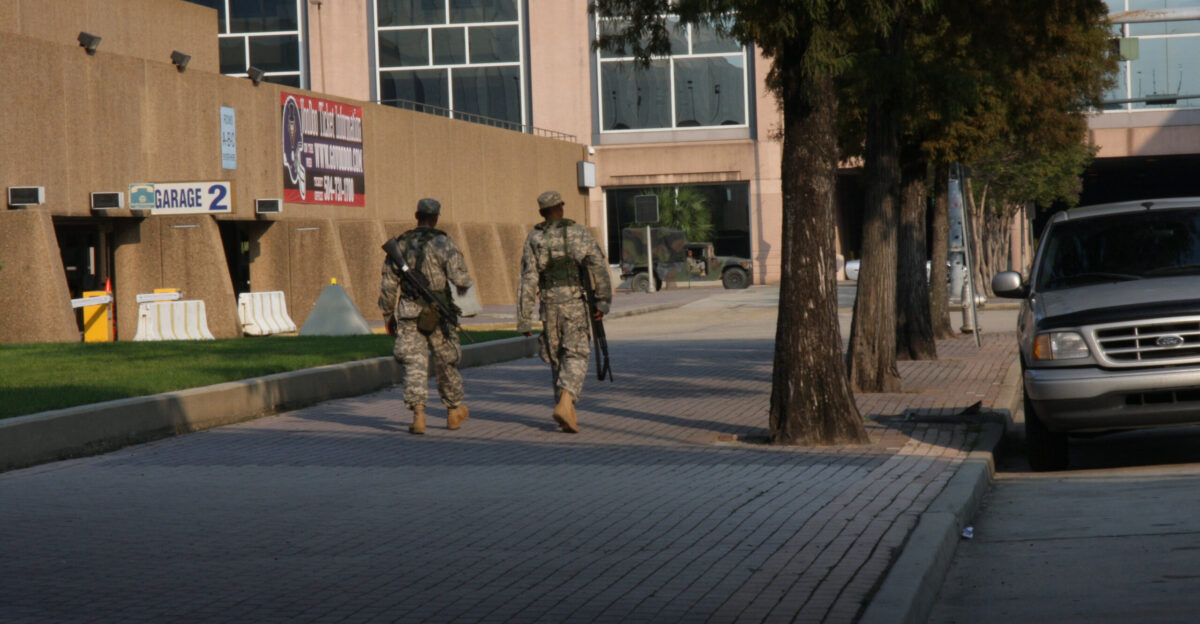
The new deployment follows a September 2025 request from Louisiana Governor Jeff Landry, who asked the Trump administration to deploy 1,000 federally funded Guard troops to Louisiana cities, citing concerns over crime and public safety. The White House approved 350 troops for New Orleans—less than half the original request but still a substantial force.
More than 800 local, state, and federal law enforcement personnel will be active in New Orleans during the holidays and Carnival. Officers and troops will seal Bourbon Street to vehicles, conduct bag checks, patrol dense pedestrian areas, and redirect traffic away from the French Quarter during peak periods.
Some Guard members have spent the past year in Washington, D.C., federalized to aid law enforcement under the Trump administration. Louisiana’s adjutant general, Major General Thomas Friloux, described them as highly trained and experienced in supporting police operations. Lieutenant Colonel Noel Collins, Louisiana National Guard spokesperson, stated the mission is designed to “enhance capabilities, stabilize the environment, assist in reducing crime, and restore public trust.” Pentagon spokesman Sean Parnell emphasized that troops will support federal law enforcement partners, such as the Department of Justice and the Department of Homeland Security, with a focus on public safety and crime reduction, rather than immigration enforcement.
Crime Trends and Political Shifting
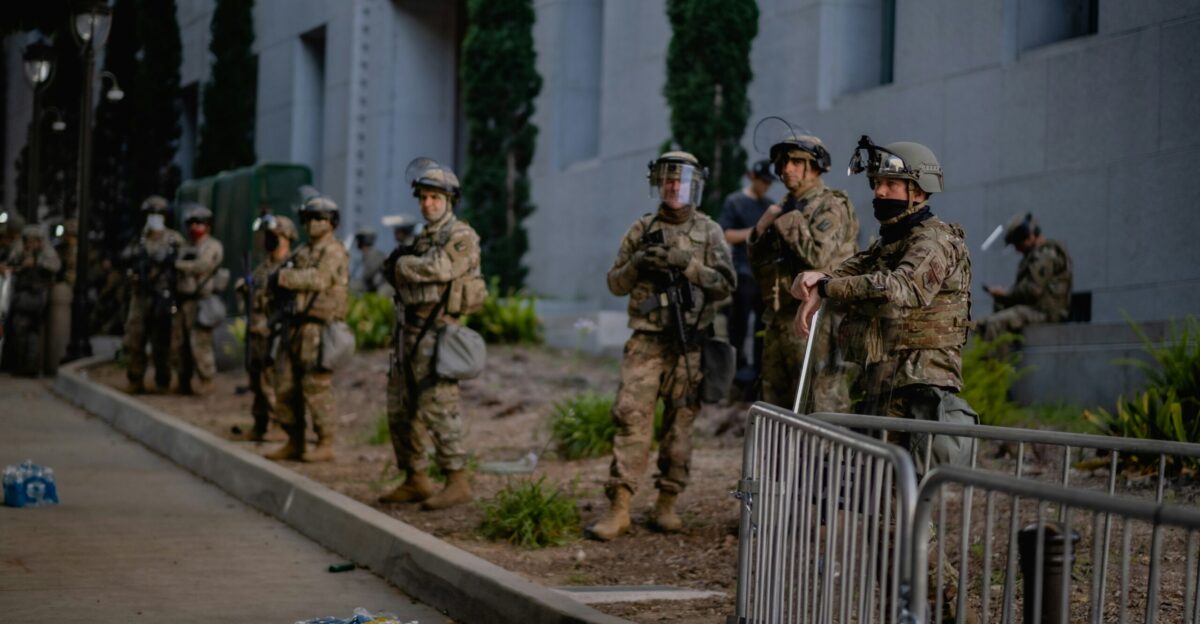
The Guard deployment comes as New Orleans records sustained drops in violent crime. By November 1, 2025, the city logged 97 homicides for the year—on track for the lowest annual total in decades, compared with 124 in 2024 and 193 in 2023. Police data also show declines in armed robbery, aggravated assault, carjacking, shootings, and property crime.
These trends have fueled debate over whether such a large-scale deployment is necessary. Critics argue that using troops amid falling violence sends the wrong signal about city conditions. Supporters counter that the Bourbon Street attack and the concentration of major events within a short window justify additional security measures.
Local political views have shifted noticeably. Mayor-elect Helena Moreno once criticized Guard deployments as scare tactics but has since revised her stance after assurances that the operation aims strictly at public safety with no cost to the city. Outgoing Mayor LaToya Cantrell has also endorsed the move—a significant shift from earlier Democratic criticism of the Guard request.
A Transformed French Quarter
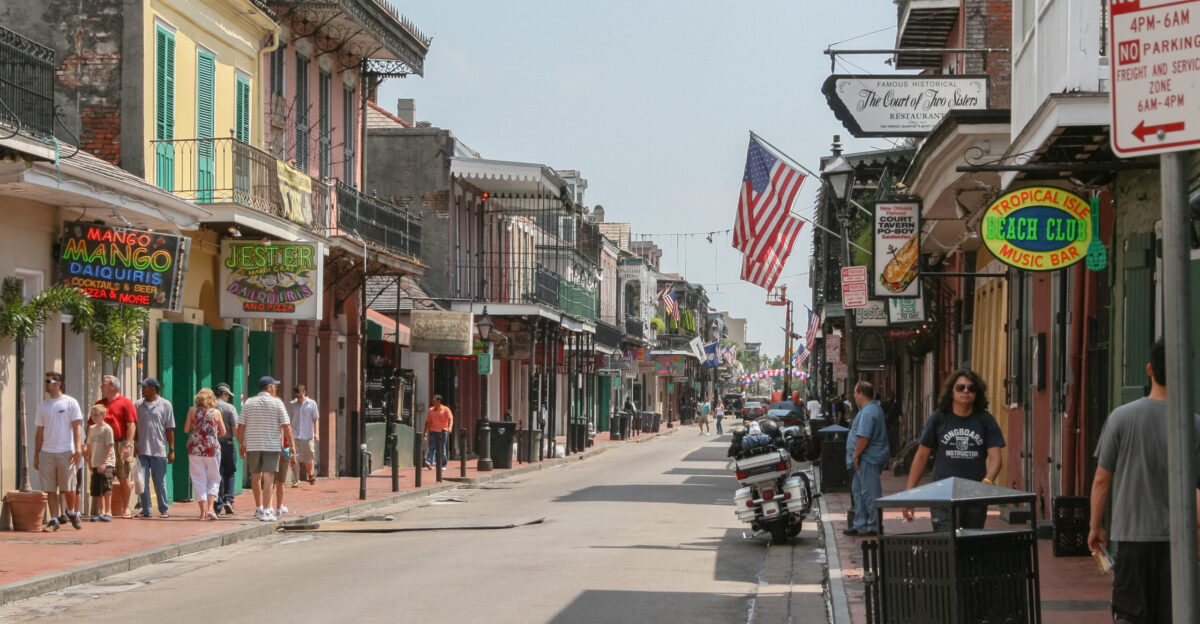
This is the third major Guard mobilization to New Orleans in 2025, following deployments for the Super Bowl and Mardi Gras. The French Quarter now looks markedly different from one year ago, with permanent steel bollards lining key stretches of Bourbon Street. Military trucks, uniformed soldiers, bag checks, and tightened vehicle restrictions have become routine during major gatherings.
Security specialists note that anniversaries of high-profile attacks can attract copycat plots, adding urgency to layered defenses ahead of the January 1, 2026, anniversary. For city leaders, the anniversary serves as both a poignant reminder of vulnerability and an opportunity to demonstrate that New Orleans has fundamentally transformed its approach to protecting its streets during large celebrations.
Sources:
“Trump Approves Deployment of 350 National Guard Members to New Orleans” — ABC News, December 23, 2025
“2025 New Orleans Truck Attack” — Wikipedia, updated January 2025
“National Guard Deploying to New Orleans for Enhanced Security Ahead of New Year’s” — CBS News, December 30, 2025
“Pentagon Deploys 350 National Guard Troops to New Orleans Amid Violent Crime Surge Ahead of Major Events” — Fox News, December 23, 2025
“2nd Louisiana National Guard Deployment of 2025 to New Orleans Now Underway” — Red River Radio, December 28, 2025
“National Guard Arrives in New Orleans for First New Year’s Since Bourbon Street Attack” — NPR, December 31, 2025