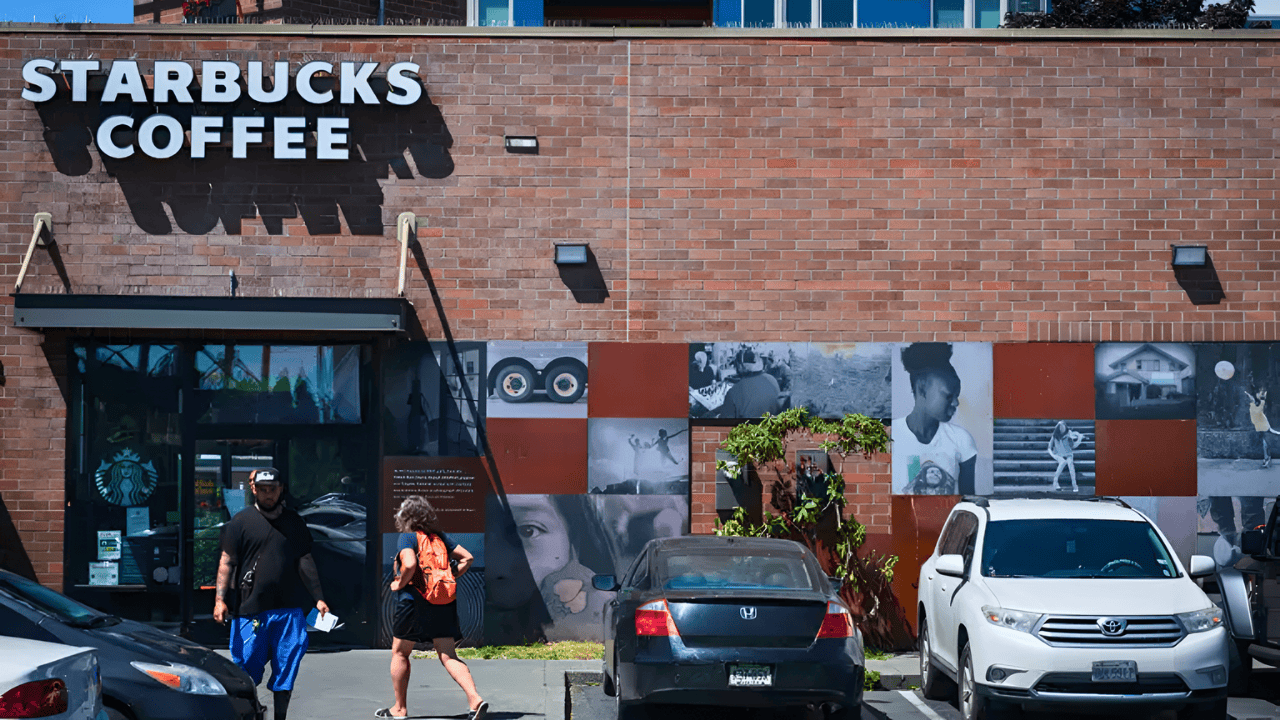
On November 14, 2025, more than 1,000 Starbucks workers staged a coordinated walkout at 65 locations across 40+ U.S. cities, deliberately timing their action to coincide with Red Cup Day—one of the company’s most profitable promotional events. The strike, authorized by a 92% union vote, transformed what Starbucks anticipated as a peak sales day into a high-visibility labor confrontation centered on wages, staffing levels, and workplace practices.
The Core Dispute
Starbucks Workers United, representing approximately 12,000 workers across 550 unionized stores, organized the action after months of stalled contract negotiations. The union’s demands centered on fair compensation, adequate staffing, and resolution of alleged unfair labor practices. Despite ongoing discussions, management and workers remained at an impasse, prompting the union to leverage Red Cup Day’s commercial significance as a pressure point.
Operational Disruptions and Customer Impact
At striking locations, customers encountered service disruptions ranging from extended wait times to complete closures. Red Cup Day promotions were suspended at affected stores, forcing patrons to seek alternatives at nearby non-unionized Starbucks locations or independent coffee shops. The timing proved particularly disruptive given that Red Cup Day typically drives substantial sales volume during the holiday shopping season.
Company Response and Scale Assessment
Starbucks characterized the strike’s impact as minimal, claiming that fewer than 1% of its stores were affected. The company noted that unionized workers represent approximately 5.5% of its 10,000 company-operated U.S. stores and roughly 4% of its 240,000+ total U.S. employees. However, the union disputed this characterization, arguing that the disruption at high-traffic urban locations—including New York and Seattle—carried greater operational significance than raw percentages suggested.
Notably, Starbucks reported that Red Cup Day 2025 sales at non-striking stores exceeded expectations. The company’s biggest sales day in North America occurred on November 6 during the holiday menu launch, suggesting that Red Cup Day’s historical prominence as the company’s top-performing day has diminished.
Competitive Landscape and Worker Costs
The strike created openings for rival coffee shops and local cafés, which experienced increased foot traffic as customers sought alternatives. Independent establishments capitalized on the disruption, though the benefit remained localized to affected cities rather than nationwide.
For participating workers, the action carried immediate financial consequences. Strikers forfeited wages during the walkout, underscoring the economic trade-off inherent in labor actions. Meanwhile, Starbucks’ stock declined slightly on the strike date, though investor confidence remained relatively stable given the company’s broader financial performance earlier in November.
Broader Labor Movement Implications
The November 2025 action represents an escalation in ongoing labor tensions at Starbucks. Previous strikes during Red Cup Day in 2022 and 2023 signaled growing friction between management and unionized workers. The current strike’s coordination and scale have drawn attention from labor organizations globally, with similar unionization efforts underway at Starbucks locations in Canada, the UK, and other regions.
Industry observers view the outcome as potentially precedent-setting for unionization efforts across the retail food service and hospitality sectors. The strike has reignited public debate about corporate responsibility, particularly given Starbucks’ progressive brand positioning and the contrast between its public values and labor practices.
Path Forward
Starbucks Workers United has signaled its commitment to continued negotiations for a comprehensive contract addressing wages, staffing, and working conditions. The union indicated that management would be expected to return to the bargaining table in coming weeks. The strike’s visibility and coordination suggest that labor mobilization within Starbucks remains robust, positioning future negotiations as consequential for both the company and the broader labor movement in retail food service.