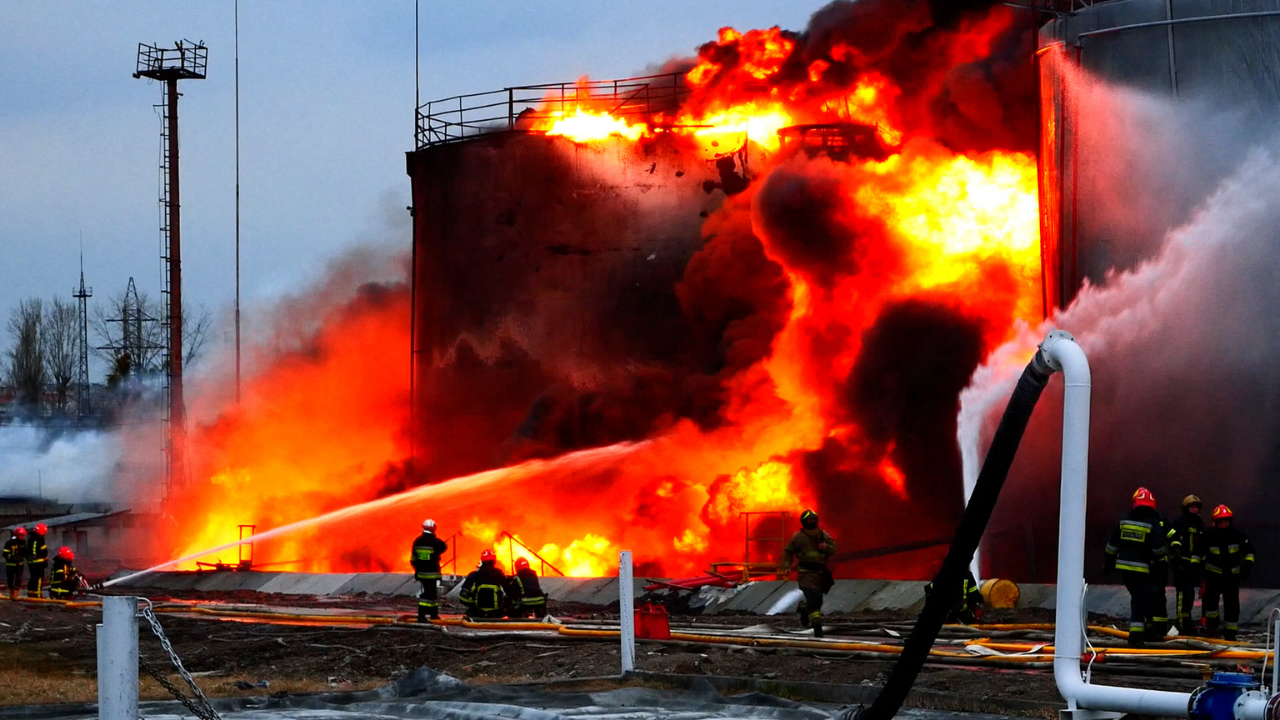
Flames tore through an oil facility in southern Russia just minutes into the New Year, lighting up the night sky as Ukrainian drones struck deep inside the country. Video from the scene shows fireballs rising from industrial structures while emergency crews rushed toward the blaze.
The strike hit a refinery that processes millions of tons of crude each year—one of the most significant energy targets Ukraine has reached so far. But this explosion was only the opening move.
Drone Onslaught Escalates
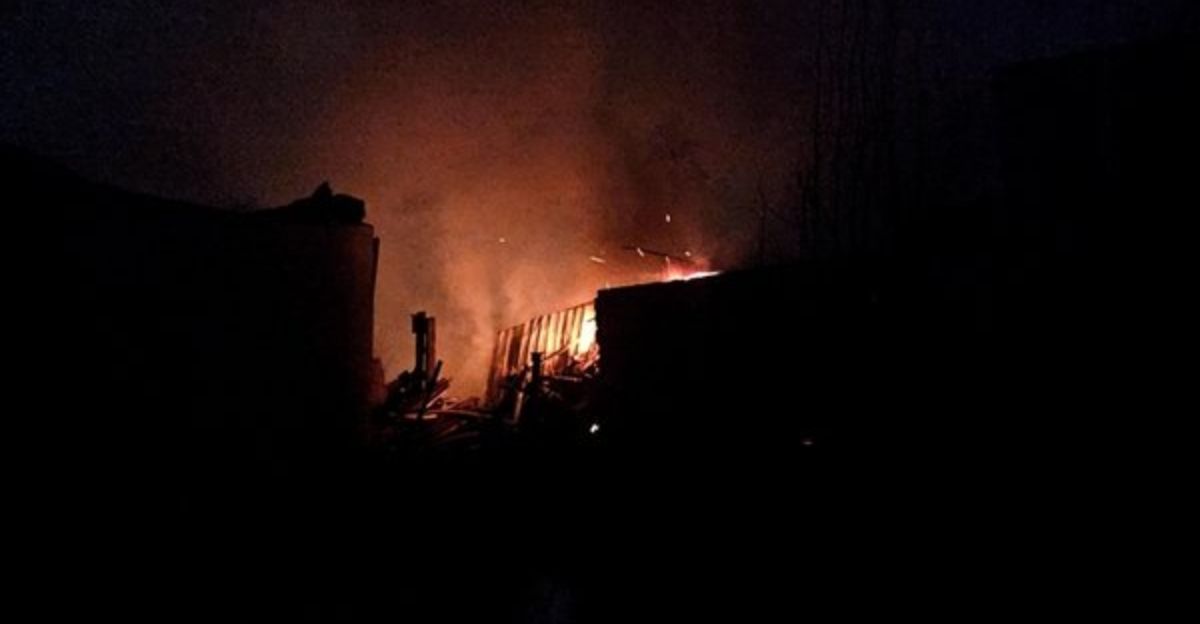
Russia faced a coordinated, multi-region drone assault between December 31 and January 1. Ukrainian strikes ignited fires at oil facilities in Krasnodar Krai and Russia’s Republic of Tatarstan, while military depots burned in Russian-occupied Donetsk Oblast.
Additional fuel storage sites in Kaluga Oblast were also affected. Ukrainian officials framed the operation as a deliberate attempt to undermine Russia’s war-sustaining infrastructure rather than symbolic strikes.
Refinery Wars Enter a New Phase
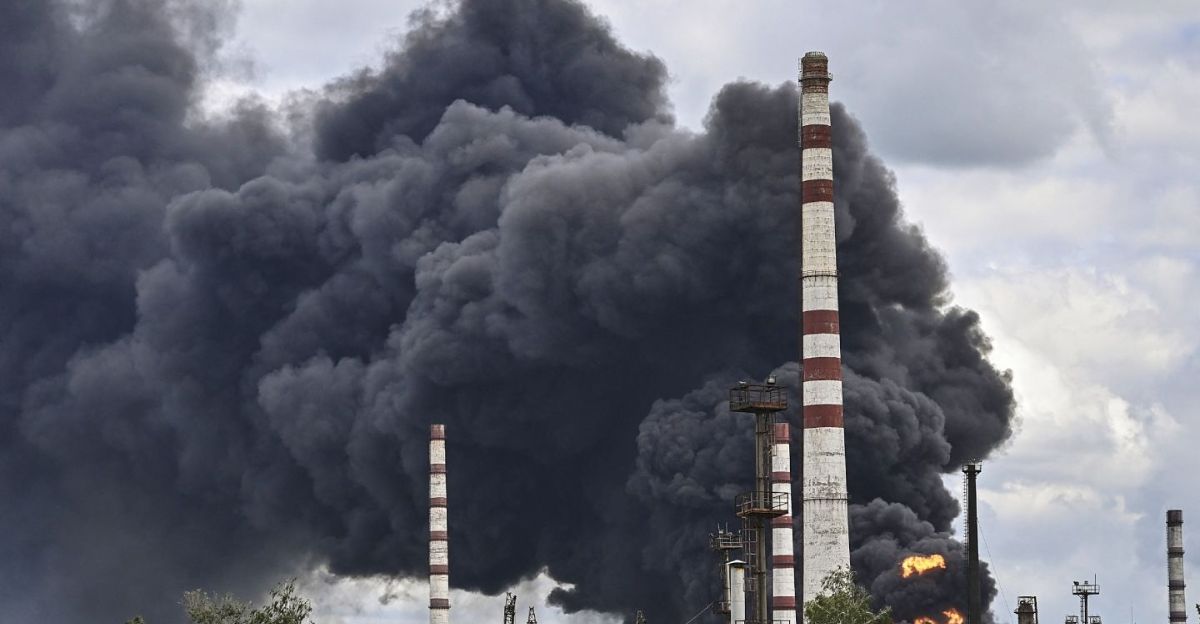
Ukraine’s campaign against Russian refineries has steadily intensified since 2024, culminating in record levels of activity by late 2025. Open-source monitoring groups track repeated hits on the same high-value facilities, signaling a shift toward systematic degradation rather than one-off attacks.
Southern refineries tied to Black Sea operations have been struck again and again. By New Year’s night, the campaign had clearly entered a new phase.
Deep-Rear Logistics Under Siege

The strikes underscore how far Ukraine’s drone capabilities now extend. Facilities hundreds of kilometers inside Russia—once considered safely out of reach—are increasingly vulnerable. Targets now include oil refineries, fuel depots, drone storage sites, and air-defense systems.
Military analysts describe the pattern as a widening “infrastructure offensive” aimed at choking logistics rather than engaging front-line units directly.
Ilsky Refinery Takes the Heaviest Blow
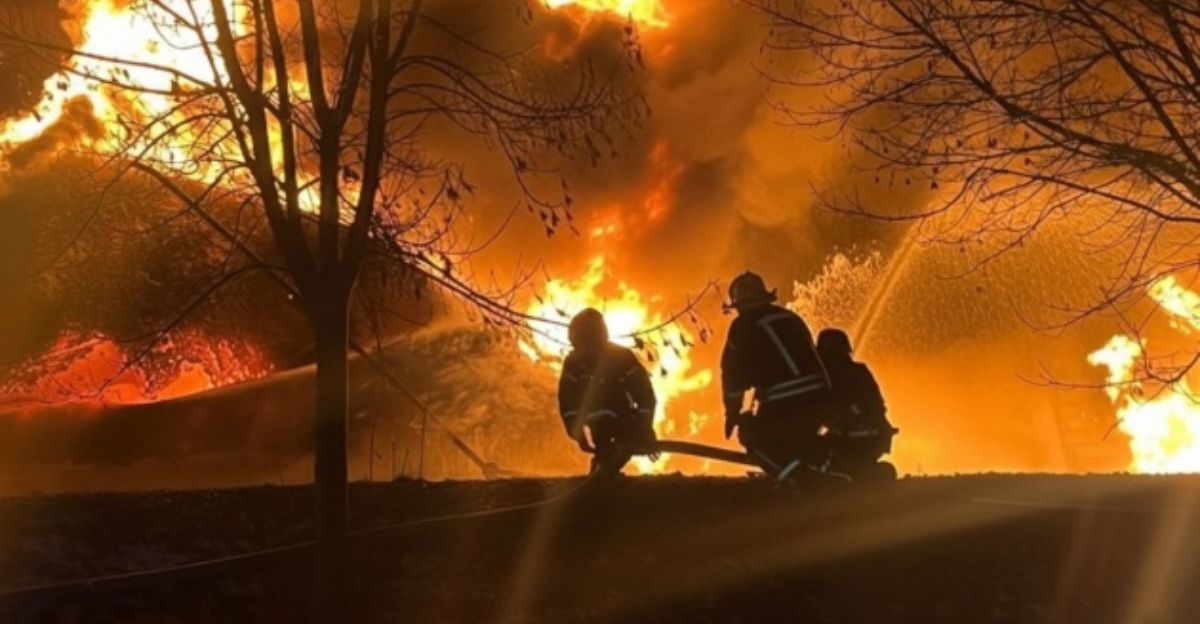
Ukraine’s General Staff confirmed that attack drones struck the Ilsky oil refinery in Krasnodar Krai on New Year’s night, triggering a major fire. The refinery processes roughly 6.6 million tons of crude annually and plays a key role in southern Russia’s fuel supply.
Video verified by monitoring groups showed large sections engulfed in flames, marking one of the most consequential refinery strikes of the campaign so far.
Krasnodar’s Fuel Hub Disrupted
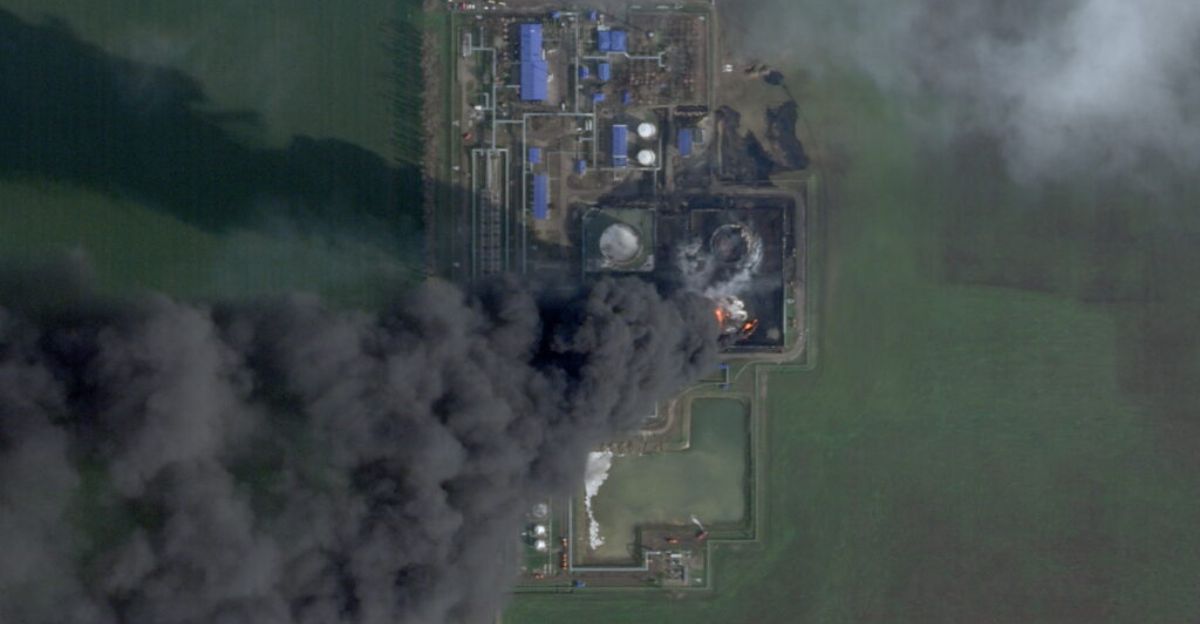
Ilsky sits inside a region critical to Russia’s southern fuel logistics, including supply routes supporting Black Sea operations. Even partial shutdowns at facilities of this scale can ripple through military supply chains.
Local authorities reported explosions and debris, while air-raid alerts and emergency responses disrupted New Year’s celebrations. The strike reinforced Krasnodar Krai’s growing role as a frontline zone in the energy war.
Fire Response and Worker Safety
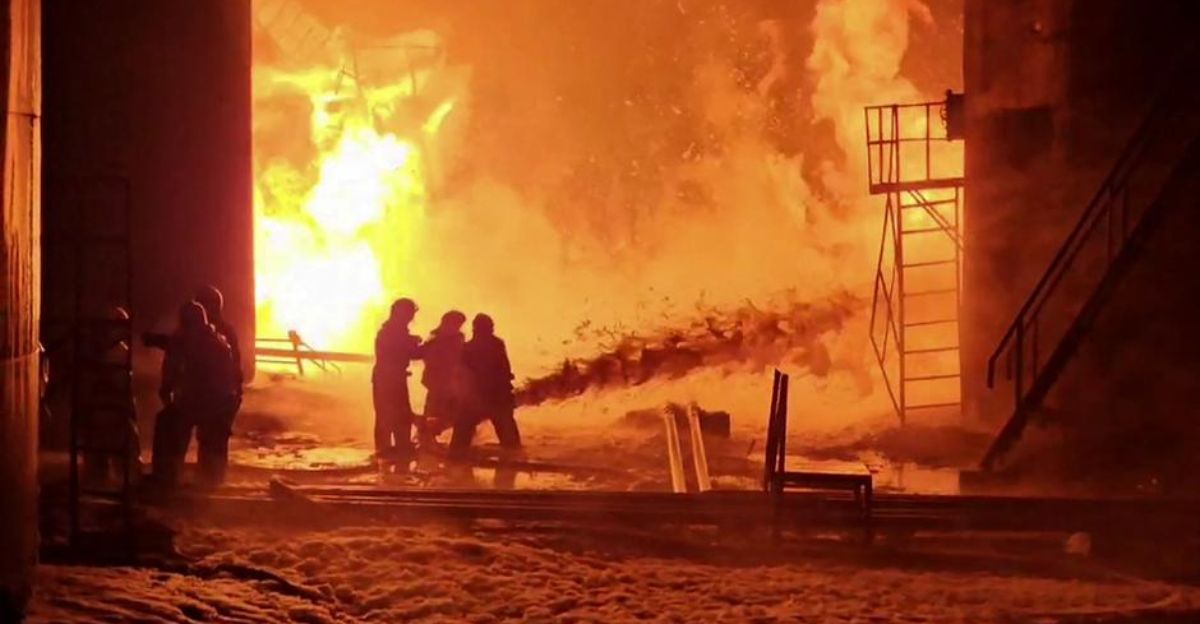
Emergency crews were dispatched quickly as fires spread across sections of the refinery. No casualties were reported in the immediate aftermath of the strike. Previous attacks on nearby refineries have followed similar patterns, with workers evacuated under established safety protocols.
While the facilities employ thousands, Russian officials have consistently emphasized containment and firefighting efforts rather than disclosing operational damage.
A Multi-Target Night of Strikes
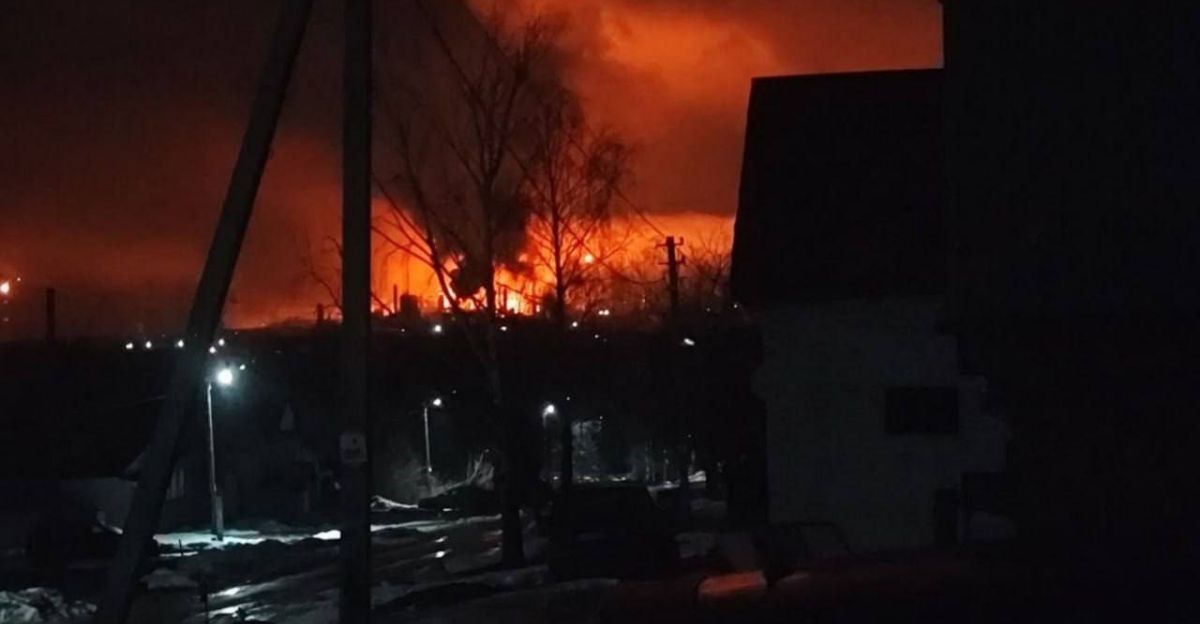
Ilsky was not the only site hit. Ukrainian forces also reported strikes on an oil preparation facility in Tatarstan, where another fire broke out. In Russian-occupied Donetsk Oblast, a fuel and lubricants depot belonging to Russia’s 51st Army burned near Ilovaisk.
A Shahed-type drone storage site in Donetsk city was also struck, reinforcing the night’s coordinated, multi-axis nature.
Why Ilsky Matters Militarily
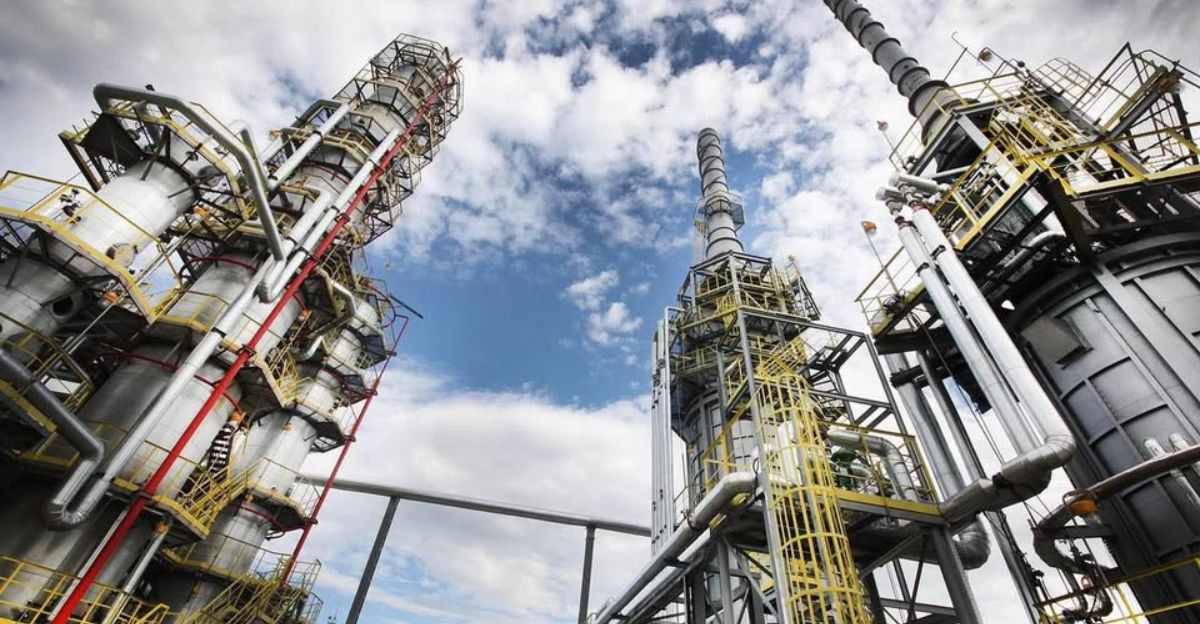
Ilsky produces aviation kerosene and other fuels vital to Russian air operations. In recent years, the refinery processed millions of tons of crude annually, yielding fuel oil, naphtha, and jet fuel used by military aircraft.
Its output supports operations tied to both frontline units and the Black Sea Fleet. That direct military relevance helps explain why the site has been repeatedly targeted.
Record Energy Attacks Set the Stage
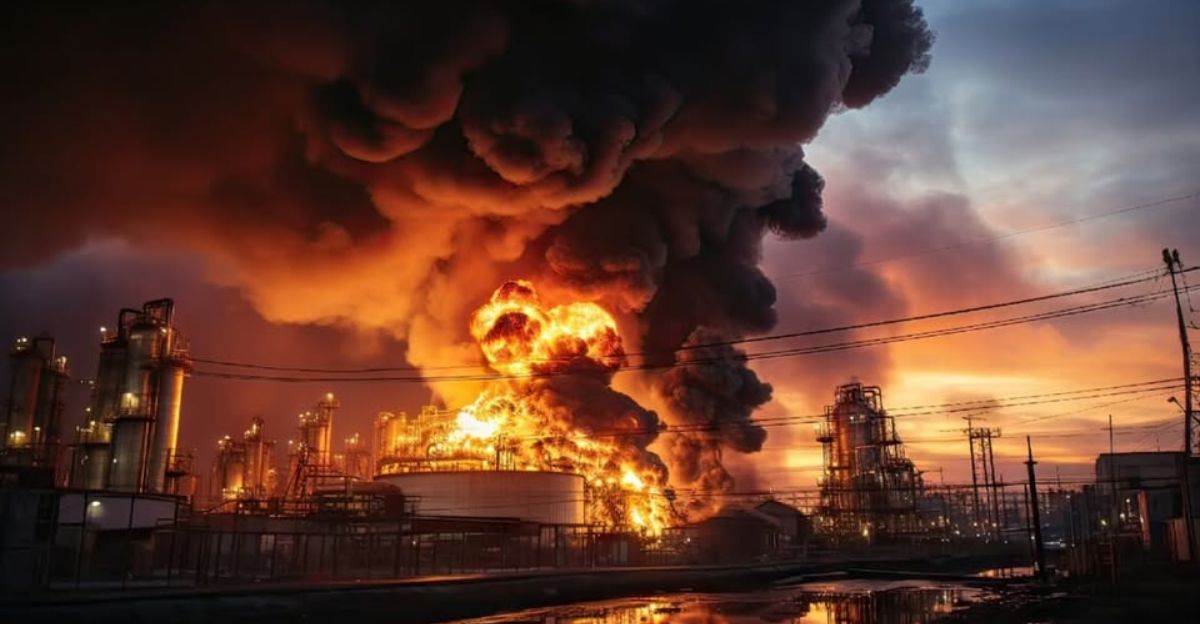
December marked the highest monthly total of Ukrainian strikes on Russian energy infrastructure since the war began. Analysts tracking refinery and depot attacks say the trend reflects a deliberate escalation strategy.
Facilities in southern and central Russia have faced sustained pressure, gradually eroding capacity and forcing rerouting. The New Year’s strike appeared designed to carry that momentum directly into 2026.
Military Depots Go Up in Flames
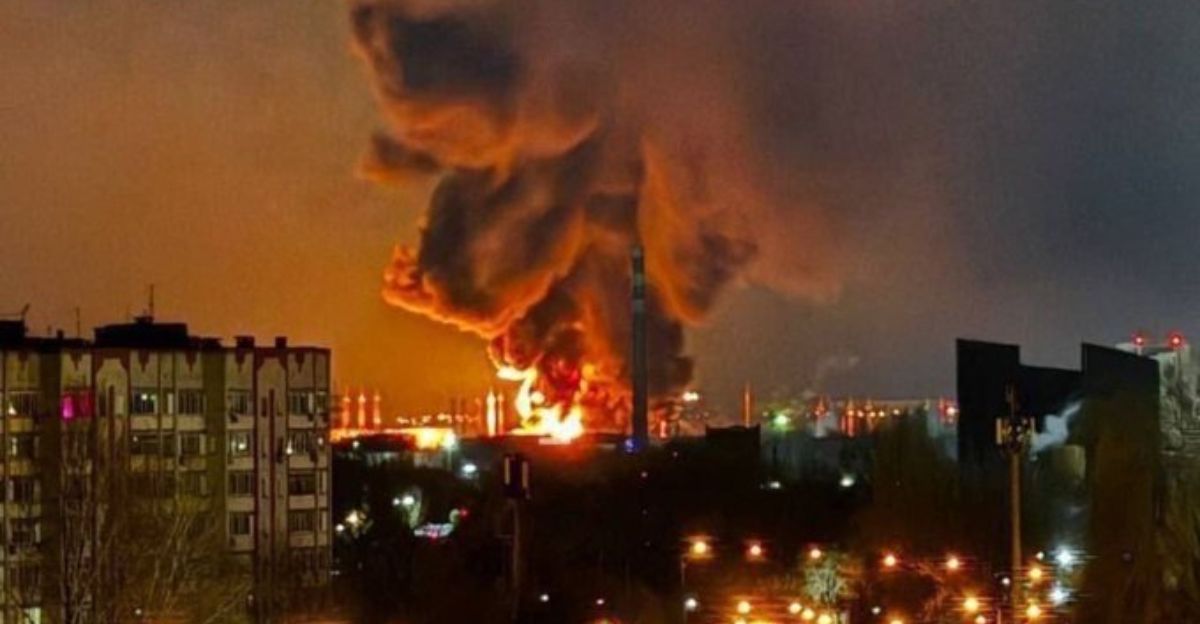
Alongside refinery strikes, Ukraine reported destroying a fuel depot used by the 51st Army near Ilovaisk. Fires also broke out at a Shahed-type drone warehouse, directly impacting Russia’s ability to launch unmanned attacks.
These targets reflect a consistent Ukrainian focus on denying fuel, drones, and logistics rather than engaging manpower directly on the battlefield.
Air Defenses Show Cracks

Russian authorities claimed dozens of drones were intercepted across multiple regions, yet fires still erupted at key facilities. Regional bans on filming strikes were imposed in several areas, highlighting sensitivity around visible damage.
Prior attacks on Ilsky and other refineries have already exposed gaps in protecting “deep-rear” assets, despite layered air-defense systems.
Repairs, Rerouting, and Risk
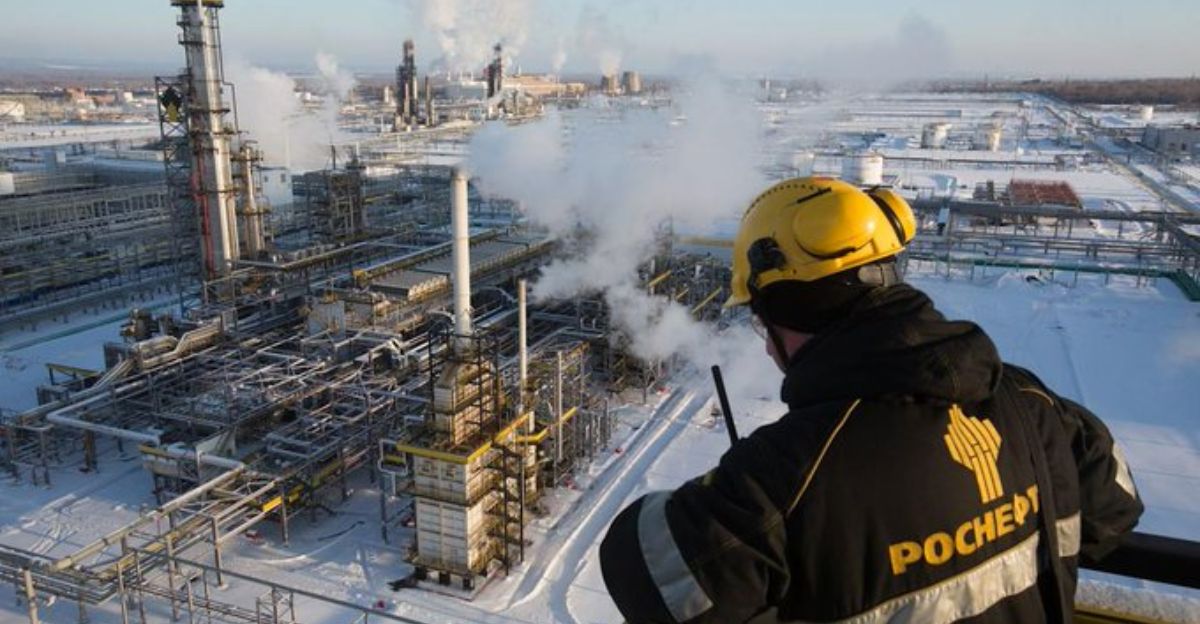
Following previous refinery strikes, Russian operators rushed repairs and attempted to disperse fuel storage to limit future losses. However, repeated hits complicate recovery.
Even when fires are extinguished quickly, inspections and repairs can take weeks. Each interruption forces Russia to reroute crude and refined products, adding stress to already stretched logistics networks.
Pressure on Black Sea Operations
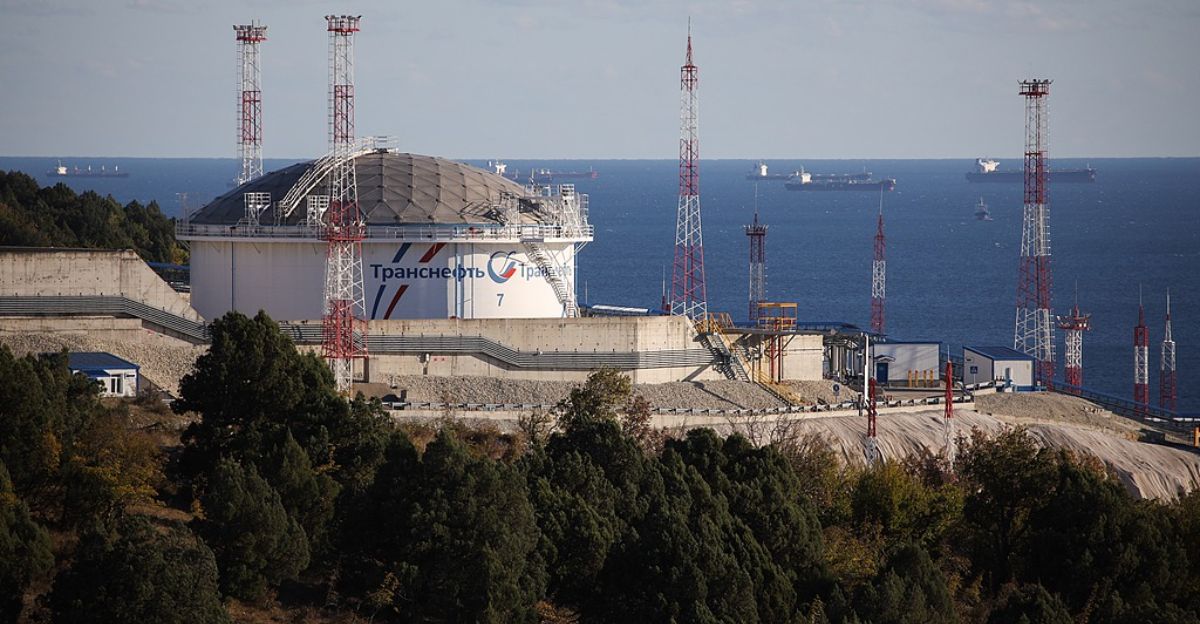
With Ilsky disrupted, Russia must compensate using other refineries, many of which are also under pressure. Analysts say the cumulative effect could strain fuel availability for southern operations tied to the Black Sea.
Enhanced air defenses and adjusted export routes are expected, but continued drone threats raise questions about how sustainable those workarounds will be.
A Refinery War With No Pause

Ukrainian officials describe the strikes as part of a broader effort to reduce Russia’s military and economic capacity. By opening 2026 with a refinery fire, Kyiv signaled that the infrastructure offensive is accelerating, not slowing.
As drones repeatedly reach deep-rear targets, the battle over fuel—and the war it sustains—shows no sign of cooling.
Sources:
“Tumultuous New Year’s Night in Russia Marked by Reported Drone Strikes on Oil Sites.” Kyiv Independent, 31 Dec 2025.
“Ukraine Strikes Ilsky Oil Refinery in Kuban and Hits Depots in Occupied Donetsk Oblast.” Ukrainska Pravda, 31 Dec 2025.
“Ukrainian Strikes on Russia’s Energy Assets Hit a Monthly Record.” Bloomberg, 30 Dec 2025.
“Ukraine Sets New Record With 24 Strikes on Russian Oil & Gas Sites in December.” United24Media, 30 Dec 2025.