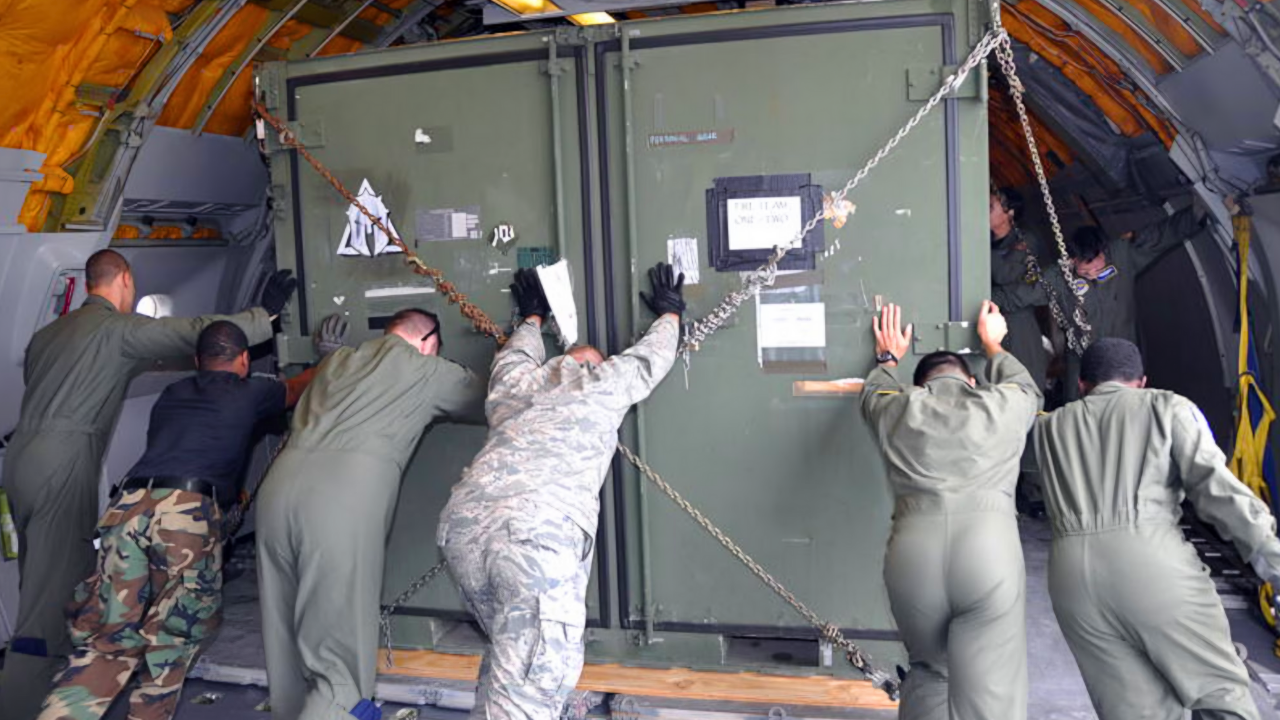
In the vast expanse of the Indian Ocean, a U.S. Special Operations team boarded a cargo ship last month, seizing Chinese-made components bound for Iran’s missile program. This high-seas interdiction underscores Washington’s pivot to direct action amid Tehran’s rapid rearmament following a devastating June 2025 Israeli-American air campaign that crippled much of its offensive arsenal.
U.S. intelligence reveals Iran is aggressively rebuilding, sourcing advanced parts from Chinese suppliers to fuel its ballistic missile production. Previously reliant on sanctions, the U.S. now employs maritime enforcement to halt shipments at sea, marking a tactical escalation under the Trump administration.
China’s Supplier Network
Beijing serves as Iran’s key provider of dual-use technologies—civilian items with clear military potential. Analysts at the Foundation for Defense of Democracies describe China as a permissive hub for exports to Iran’s Islamic Revolutionary Guard Corps, despite U.S. Treasury sanctions in April 2025 targeting these networks.
Chinese firms have shown little deterrence, continuing to ship materials essential for solid-fuel rockets. Early 2025 saw Iran import 1,000 tons of sodium perchlorate via the cargo ships Golbon and Jairan, enough to power about 260 short-range ballistic missiles. U.S. sanctions hit involved Iranian and Chinese entities, yet investigations found the transfers persisted.
By mid-June 2025, intelligence uncovered a massive order: 185 shipping containers of ammonium perchlorate from Hong Kong’s Lion Commodities Holdings Ltd., potentially enabling production of up to 800 missiles. Congressional figures, including Representatives Krishnamoorthi and Courtney, called for probes into how such volumes evaded detection in international waters.
The High-Seas Seizure

Several hundred miles off Sri Lanka, U.S. forces under Indo-Pacific Command authority intercepted the vessel. They confiscated precision spectrometers, gyroscopes, and measurement tools headed to Iranian missile specialists. This marked the first known U.S. military grab of Chinese-origin cargo destined for Iran in recent years.
The team destroyed the items on board, allowing the ship to proceed, a move aimed at squeezing supply lines without broader trade disruption. Officials noted these components could sharpen Iran’s missile guidance and targeting, vital for conventional systems. The action preceded another U.S. tanker seizure off Venezuela.
Legal and Strategic Foundations
The operation drew on U.N. Security Council Resolution 1929, which authorizes inspections and seizures of prohibited arms cargo after a late September 2025 snapback embargo on Iran. Enacted post-June strikes on its nuclear and missile sites, the resolution provides international cover for high-seas boardings when reasonable suspicion exists.
Precision parts like spectrometers outweigh bulk chemicals in impact, per FDD’s Iran Director Behnam Ben Taleblu. A few units can upgrade dozens of missiles, boosting accuracy and lethality far beyond fuel alone. This focus explains U.S. emphasis on high-value, low-volume intercepts.
Ongoing Challenges and Adaptations
Despite the raid, intelligence estimates it snared just 5-10% of flows, with Iran using front companies, Southeast Asian hubs like Hong Kong and Singapore, and obfuscated routes. Tehran now diversifies to Russia, North Korea, and others, hiking costs but not halting procurement.
China denies aiding Iran’s military, yet tolerates private exporters, possibly for profit or to counter U.S. sway. Beijing protested the seizure as infringing on its shipping rights, with state media labeling it piracy, but stopped short of escalation. Gulf allies back the enforcement warily, fearing Iranian reprisals, while India urges multilateral coordination.
The interdiction signals a sustained U.S.-Israel containment push, blending military moves with economic pressure, as voiced by Secretary of State Marco Rubio. Analysts split on impact: some see delays in upgrades from scarce parts; others view it as minor amid Iran’s stockpiles and vast orders that could double its arsenal.
Looking ahead, U.S. forces eye more operations near the Strait of Hormuz and Indian Ocean chokepoints, mapping procurement paths. Iran warns of retaliation against perceived piracy, hinting at rising naval risks in 2026. Success hinges on allied buy-in, Chinese restraint, and Tehran’s adaptability in this shadow contest over missile technology.
Sources:
Wall Street Journal – U.S. Forces Raid Ship, Seize Cargo Headed to Iran From China
Reuters – US Forces Raided Ship Headed to Iran from China in Indian Ocean
New York Times – U.S. Boarded Ship and Seized Cargo Heading to Iran From China
Foundation for Defense of Democracies – Iran Purchases Missile Fuel Materials From China
U.S. Department of Treasury – Treasury Targets Network Procuring Missile Propellant Ingredients for Iran’s IRGC